
The VR Learning Revolution
Abstract:
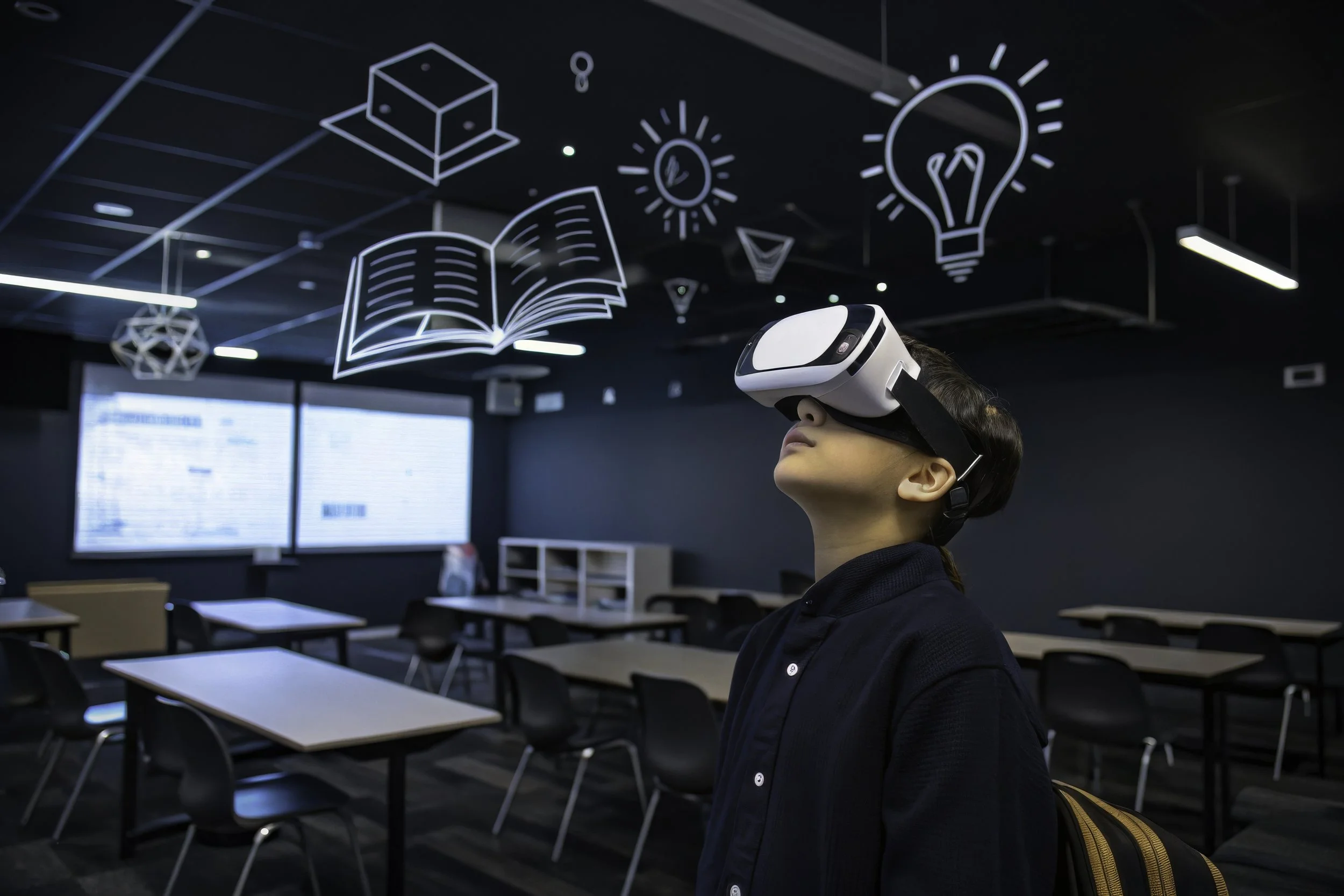
Virtual Reality (VR) is revolutionizing education and professional training by creating immersive, interactive environments where learners can practice skills, explore simulations, and engage with content like never before. From medical training and industrial safety to remote classrooms and soft skills development, VR brings experiential learning into the digital age. This article explores how VR technology is enhancing engagement, improving retention, and expanding access to high-impact learning experiences. As adoption grows, VR is reshaping the future of education and workforce development.
Keywords:
Virtual Reality, VR Training, Immersive Learning, Virtual Classrooms, EdTech, Skill Development, Experiential Learning, Remote Education, 3D Simulation, Learning Technology
Introduction:
Learning by doing has always been one of the most effective ways to understand and retain information. Virtual Reality brings this concept to life by allowing students and professionals to immerse themselves in realistic, interactive environments. Unlike traditional e-learning or video tutorials, VR places users in lifelike scenarios where they can explore, practice, and make decisions in real time. Whether it’s a medical student performing a simulated surgery or a remote learner attending a virtual lecture hall, VR is unlocking new possibilities for education and training across industries.
1. Skill-Based Training in Simulated Environments
VR is widely used for technical and hands-on training. In industries like healthcare, aviation, and construction, VR simulations let learners perform complex tasks—like operating machinery or conducting procedures—without real-world risks. Programs such as Osso VR (for surgical training) and STRIVR (for employee development) help professionals build muscle memory, gain confidence, and reduce the learning curve. These experiences mimic real-world environments and outcomes, making training both safe and highly effective.
2. Virtual Classrooms for Remote Learning
Beyond physical training, VR is creating dynamic virtual classrooms where students can interact with instructors and peers in 3D environments. Platforms like Engage and ClassVR offer virtual lecture halls, labs, and breakout rooms that enhance remote education beyond traditional video calls. Students can walk around, collaborate on projects, or conduct virtual experiments, creating a sense of presence and community—critical factors in online learning success.
3. Engagement, Retention, and Accessibility
Immersive experiences are proven to increase engagement and knowledge retention. A study by PwC found that VR learners were 4x more focused than e-learners and retained content better over time. VR also supports diverse learning styles, making education more accessible for students who benefit from visual, kinesthetic, or interactive methods. While the cost of VR hardware is still a barrier for some, falling prices and mobile-compatible headsets are helping close the gap.
4. Challenges and the Road Ahead
Despite its benefits, VR in education faces technical, financial, and logistical challenges. Content creation is complex, and not all curricula translate easily into immersive formats. Schools and organizations must also address issues like headset sanitation, motion sickness, and accessibility for learners with disabilities. However, as the technology matures, new tools, standards, and content libraries are making VR easier to implement and scale. The future holds promise for blended learning environments where VR complements traditional methods for a richer educational experience.
Conclusion:
Virtual Reality is transforming the way people learn, train, and connect. By offering immersive, interactive, and scalable solutions, VR training and virtual classrooms are making education more engaging and impactful. As technology becomes more accessible, VR will continue to reshape how knowledge is delivered—preparing students and professionals for the challenges of an increasingly digital world.
Resources:
· PwC – The Effectiveness of VR for Training:
https://www.pwc.com/us/en/tech-effect/emerging-tech/vr-training-effectiveness.html
· Osso VR – Surgical VR Training:
https://www.ossovr.com/
· Engage – Virtual Learning Platform:
https://engagevr.io/
· ClassVR – VR for Schools and Education:
https://www.classvr.com/
· STRIVR – Enterprise VR Training:
https://www.strivr.com/