
AI-Powered Public Transit
Abstract:
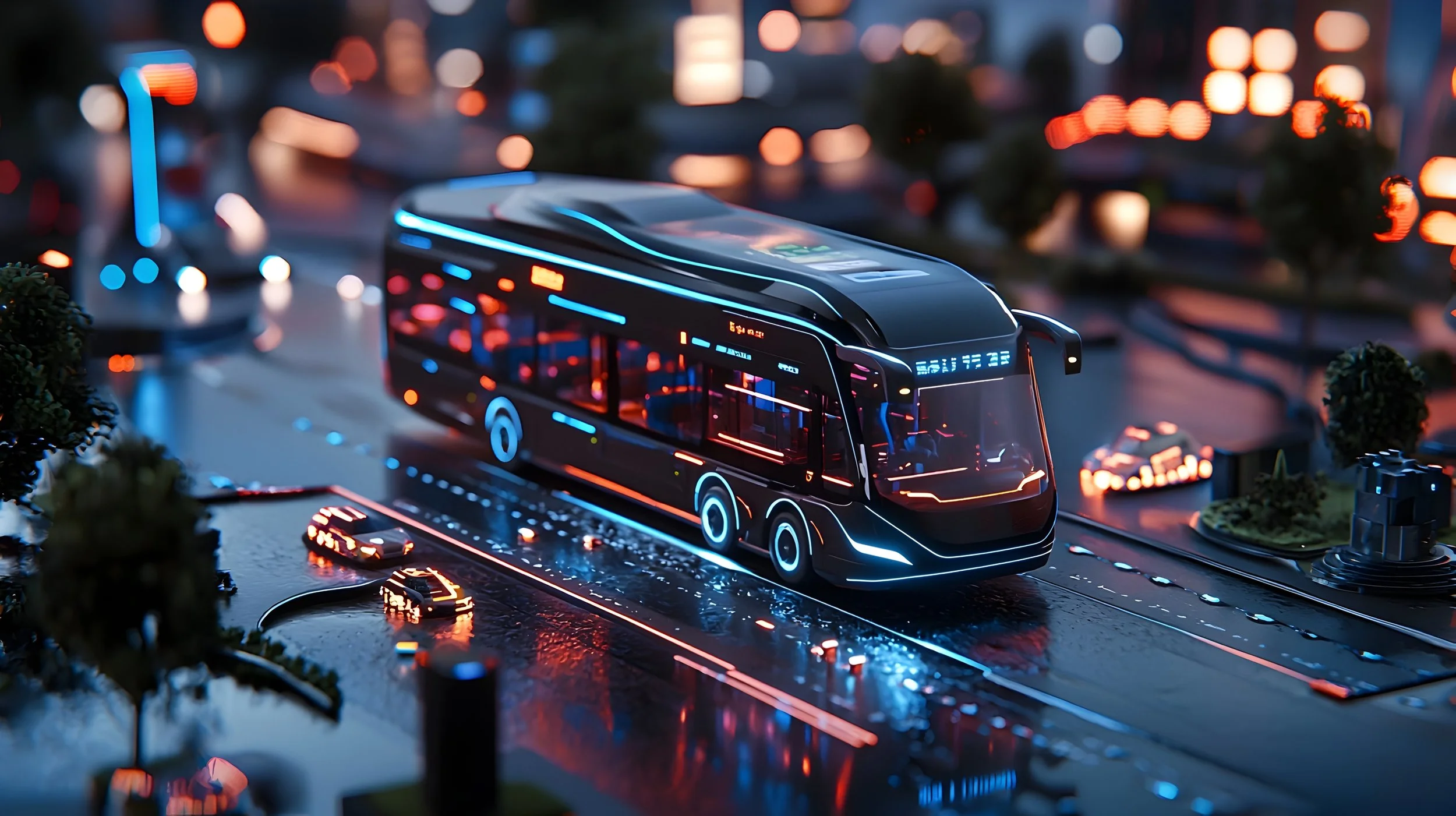
Autonomous public transit is no longer science fiction—it’s an emerging reality reshaping how people move through urban environments. Powered by artificial intelligence, self-driving buses are offering safer, more efficient, and more flexible commuting options in cities around the world. This article explores how AI technologies enable autonomy in public transport, the benefits and limitations of self-driving buses, and the role they play in building smarter, greener cities. With pilot programs expanding and technology maturing, autonomous transit is poised to become a core element of future urban mobility systems.
Keywords:
Autonomous Vehicles, Self-Driving Buses, Public Transit, Urban Mobility, Artificial Intelligence, Smart Cities, Transportation Innovation, AI in Transportation, Transit Automation, Sustainable Mobility
Introduction:
Urban mobility is facing growing challenges—traffic congestion, carbon emissions, rising operational costs, and aging transportation systems. As cities look to improve sustainability and efficiency, autonomous public transit is gaining attention. Self-driving buses, guided by artificial intelligence, sensors, and real-time data, are beginning to serve commuters in select cities. These systems can reduce labor dependency, optimize routes, and enhance road safety, all while offering reliable service. This article explores the technology behind autonomous transit, current deployments, and what lies ahead for AI-driven commuting.
1. How Self-Driving Buses Work
Autonomous buses use a suite of AI-driven technologies, including computer vision, LIDAR, GPS, radar, and onboard cameras to perceive their environment. These systems work together to detect obstacles, navigate roadways, follow traffic laws, and respond to pedestrians or vehicles in real time. Machine learning algorithms process data continuously, allowing the vehicle to improve its decision-making capabilities over time. Onboard control systems manage acceleration, braking, and steering without human intervention, creating a seamless automated commute.
2. Pilot Programs and Real-World Adoption
Cities across Europe, Asia, and North America are already experimenting with autonomous bus programs. In Sweden, self-driving shuttles operate in mixed traffic under the EU's AVENUE project. Singapore has tested autonomous buses on university campuses and industrial parks. In the U.S., cities like Las Vegas and Jacksonville have deployed self-driving shuttles in designated downtown loops. These pilot programs collect data, refine AI models, and test system performance under real-world conditions, often with safety operators onboard for early phases.
3. Benefits for Urban Commutes and City Infrastructure
Autonomous buses can reduce operational costs by lowering the need for drivers, improve road safety by minimizing human error, and offer flexible scheduling based on passenger demand. They can also operate during off-peak hours and serve underserved areas where traditional routes may not be cost-effective. From an urban planning perspective, these systems support goals of reducing emissions, optimizing traffic flow, and enabling more adaptive, user-focused transportation networks.
4. Challenges, Regulation, and Public Trust
Despite progress, challenges remain. Autonomous systems must navigate complex and unpredictable city environments. Regulatory frameworks are still developing, and public acceptance depends on building trust in the technology’s safety and reliability. Issues such as cybersecurity, insurance liability, and emergency response protocols must also be addressed. While technology is advancing quickly, full-scale deployment will require coordinated policy, infrastructure upgrades, and careful stakeholder collaboration.
Conclusion:
AI-powered self-driving buses represent a bold step forward in the evolution of public transit. By combining intelligent automation with urban mobility needs, these systems offer the potential for safer, cleaner, and more efficient commutes. As technology matures and cities adapt, autonomous public transit may become a defining feature of 21st-century urban life—reshaping not just how we move, but how cities are designed and experienced.
Resources:
· European Commission – AVENUE Project for Autonomous Public Transport:
https://h2020-avenue.eu/
· National Renewable Energy Laboratory – Automated Transit Systems:
https://www.nrel.gov/transportation/automated-transit.html
· U.S. DOT – Automated Vehicles Policy:
https://www.transportation.gov/AV
· Waymo – Self-Driving Technology Overview:
https://waymo.com/tech/
· World Economic Forum – The Future of Urban Mobility:
https://www.weforum.org/agenda/archive/urban-mobility/